A small patio does not need a large seating arrangement to feel inviting. A thoughtfully placed awning, two comfortable chairs and a clear route to the garden can give a compact outdoor corner a purpose.
The most useful small patio awning ideas begin with the space you already have. Consider the doorway, the furniture you want to use and the connection between the house and garden before choosing the appearance of the cover.
This guide explores five ways to bring those details together, using a patio-awning reference from HEBE Exterio as a starting point.
1. Define a seating corner instead of covering everything
Start by deciding what the patio should do. A place for two people to have tea needs a different arrangement from an outdoor dining area.
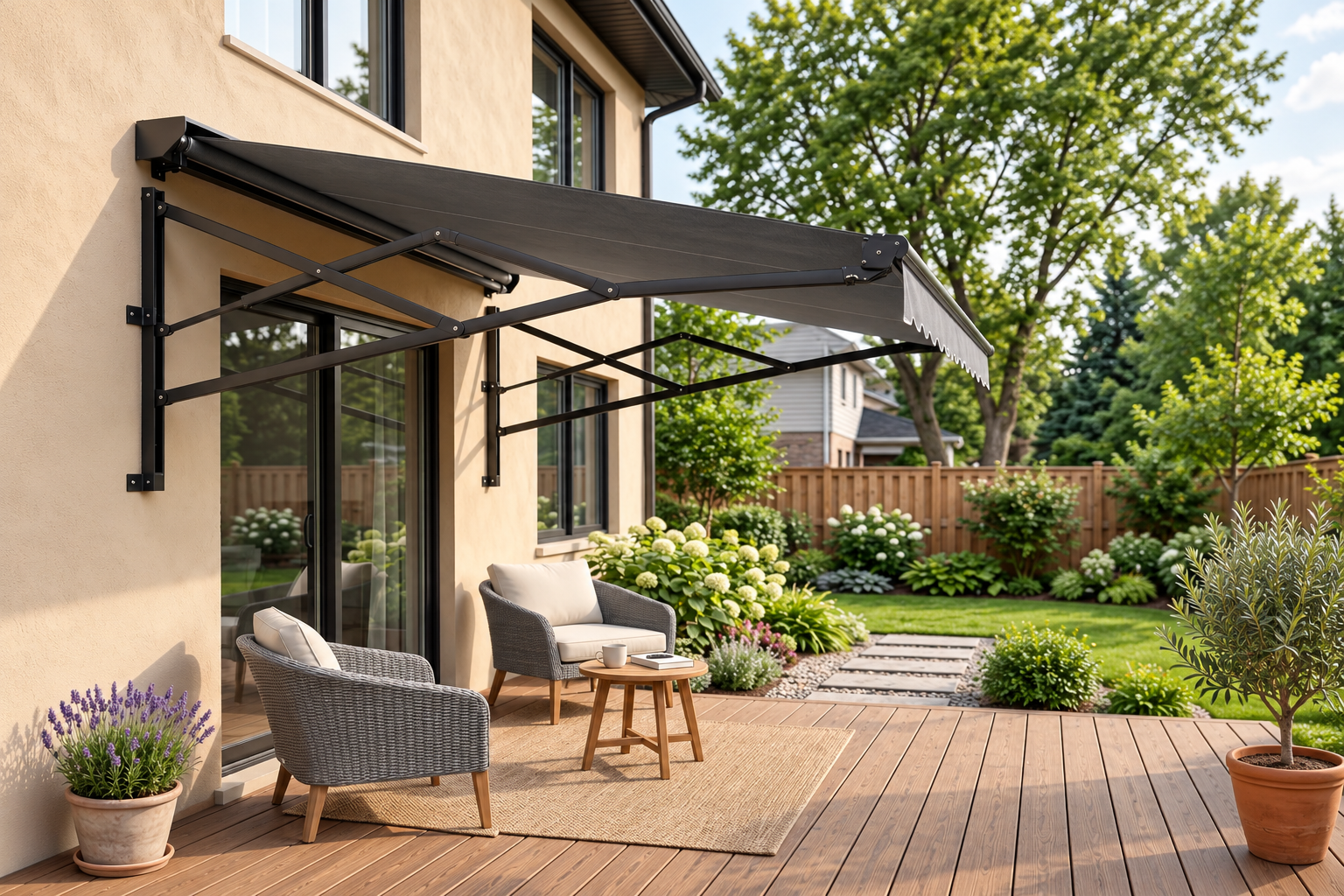
In HEBE Exterio’s modern retractable patio awning reference, two woven chairs and a small round table create a clear seating zone beside the house. The surrounding deck remains visually open, allowing the garden to stay part of the composition.
For your own patio, place the furniture first in a rough layout. Leave room to pull chairs back and move between the doorway and garden. Then discuss the area you want shaded rather than assuming the entire patio needs a cover.
Explore the modern retractable patio awning reference.
2. Coordinate the awning with existing window frames
A compact exterior can feel busy when every element introduces a different colour or finish.
One approach is to connect the awning frame visually with existing window and door frames. In the HEBE Exterio reference, the dark awning components relate to the dark-framed glazing, while the warm wall colour provides a contrasting background.
You do not need to match every surface. Instead, choose one or two details to repeat, such as a dark frame colour or a warm timber tone.
When shortlisting contemporary patio awnings, ask yourself:
- Does the frame colour work with the doors and windows?
- Does the front edge compete with other architectural details?
- Will the design still look coordinated when viewed from the garden?
- Are visible brackets part of the appearance you want?
These questions help you compare complete compositions rather than isolated products.
3. Consider how the patio should look with the cover open or closed
A retractable patio awning introduces two visual arrangements: the shaded space with the cover extended, and the more open space when it is retracted.
Think about both before selecting a design. You may want shade during afternoon use while preferring a clearer view of the sky at other times.
The reference image shows the extended arrangement. It does not establish the system’s dimensions, operating method or weather limits. Request those details for the actual system you are considering.
For a comparison of fixed and retractable options, read the patio awning planning guide.
4. Keep furniture and planting in proportion
Furniture can make a small patio feel comfortable or crowded.
For a compact conversation corner, consider starting with two chairs and a table that holds the items you normally use. If dining is the priority, plan around the dining furniture instead of adding it after the shade layout has been chosen.
In the HEBE Exterio reference, light cushions soften the darker woven chairs, while planting sits around the edges of the deck. This gives the seating area a defined centre without filling every available surface.
Try these styling ideas:
- Repeat a cushion colour rather than using several competing patterns.
- Use one taller plant as an accent instead of many similar pots.
- Keep the main walking route clear.
- Choose accessories around actual use, such as a small table for tea or reading.
- Check outdoor suitability and care requirements before buying furniture or textiles.
A rug may help define the seating arrangement visually, but its suitability depends on exposure, drainage and the product’s care instructions.
5. Connect the shaded corner to the garden
Modern patio shade ideas work best when the covered area feels connected to what lies beyond it.
In the reference, the timber-look deck leads towards a garden path. Planting frames the view, giving the seating corner something to face other than the house wall.
For your own space, consider the view from a seated position. A planted border, a small courtyard or a clear path can become the focus of the arrangement.
Even where there is no large garden, a deliberate view towards a planter or a simple wall feature can help organise the space. Avoid placing so many decorative elements around the patio that the seating area loses its purpose.
Create a simple brief before choosing an awning
Save two or three references and write down what you like about each. Separate visual preferences from practical requirements.
Your brief could include:
- Intended use: tea, reading, conversation or dining.
- Furniture: items you already own and items you need.
- Preferred appearance: frame colour, cover colour and front-edge profile.
- Surroundings: doorways, windows, garden access and existing planting.
- Questions to resolve: shade at your preferred time of day, support locations, drainage and maintenance.
Observe where sunlight falls when you usually use the patio. Do not assume that a cover positioned directly above the furniture will shade it at every hour.
Ask the appropriate professional to assess fixings, clearances, weather exposure and drainage for the proposed installation. A reference photograph cannot confirm those requirements.
Frequently asked questions
What is a useful starting point for a small patio awning design?
Begin with the seating or activity area. Arrange the furniture, identify the walking route and record when you want shade. This gives you a clearer brief for comparing awning layouts.
Can a dark awning suit a small patio?
A dark cover or frame can form part of a coordinated design, especially where the house already has dark window frames. Compare samples in the actual setting; colour alone does not establish shade quality, thermal performance or suitability.
Should I choose an awning or a pergola-style cover?
Compare how each relates to the space. A wall-mounted awning may suit a seating corner beside the house, while a pergola-style frame creates a different architectural outline. Their support and installation requirements need separate assessment.
Does a retractable awning make a patio usable in all weather?
Do not assume all-weather suitability. Check the selected system’s documented operating limits and follow the supplier’s instructions for wind, rain and storage.
Explore patio awning ideas on HEBE Exterio
The right reference should help you explain how you want your outdoor space to look and feel.
Browse the contemporary patio awning design collection, shortlist ideas for a similar setting and note the details you would like to discuss with your project professional.
HEBE Exterio provides design inspiration. Catalogue images are visual references, not construction drawings or confirmation of materials, performance or completed installations.