How to Choose the Right Exterior Design Style for Your Home
A well-designed exterior creates the first impression of a home. The entrance gate, façade, balcony railing, canopy, pergola and privacy screens should not look like unrelated additions. Together, they should communicate one clear architectural direction.
With countless design images available online, it is easy to save attractive references without knowing whether they will work together. The following steps can help you compare ideas more thoughtfully and create a practical exterior-design shortlist.
1. Begin With the Architecture of the House
The exterior elements should complement the building rather than compete with it.
A contemporary home with clean horizontal lines may suit minimal gates, slim balcony railings and simple geometric screens. A more traditional elevation may work better with warmer materials, decorative patterns and deeper architectural details.
Before selecting individual products, observe:
- The overall shape and proportions of the building
- Existing doors and windows
- Balcony sizes and positions
- Roof and canopy lines
- Visible structural elements
- The relationship between open and solid surfaces
The objective is not to make every component identical. It is to make them feel connected.
2. Compare Four Exterior Style Directions
Choose a direction for the whole elevation before selecting individual elements. These are styling ideas, not fixed architectural rules. The gate references illustrate a design language, not a complete house specification.
| Direction | Visual character | Coordination example |
|---|---|---|
| Minimal and Contemporary | Simple lines, repeated slats and restrained detail. | Repeat one line direction in the gate and railing, and keep the main wall quiet. |
| Warm Modern | Clean forms softened by warm textures or wood-look accents. | Carry one warm accent from the entrance to a porch or balcony detail. |
| Geometric Statement | A repeated geometric pattern used as a focal point. | Use a geometric gate with a simpler railing rather than repeating a dense pattern everywhere. |
| Decorative Modern | Ornamental detail balanced with a simple surrounding elevation. | Let the entrance carry the ornament while walls and adjacent rails stay understated. |
Minimal and Contemporary
Colour and material direction: Try charcoal or neutral metal tones against a light wall.
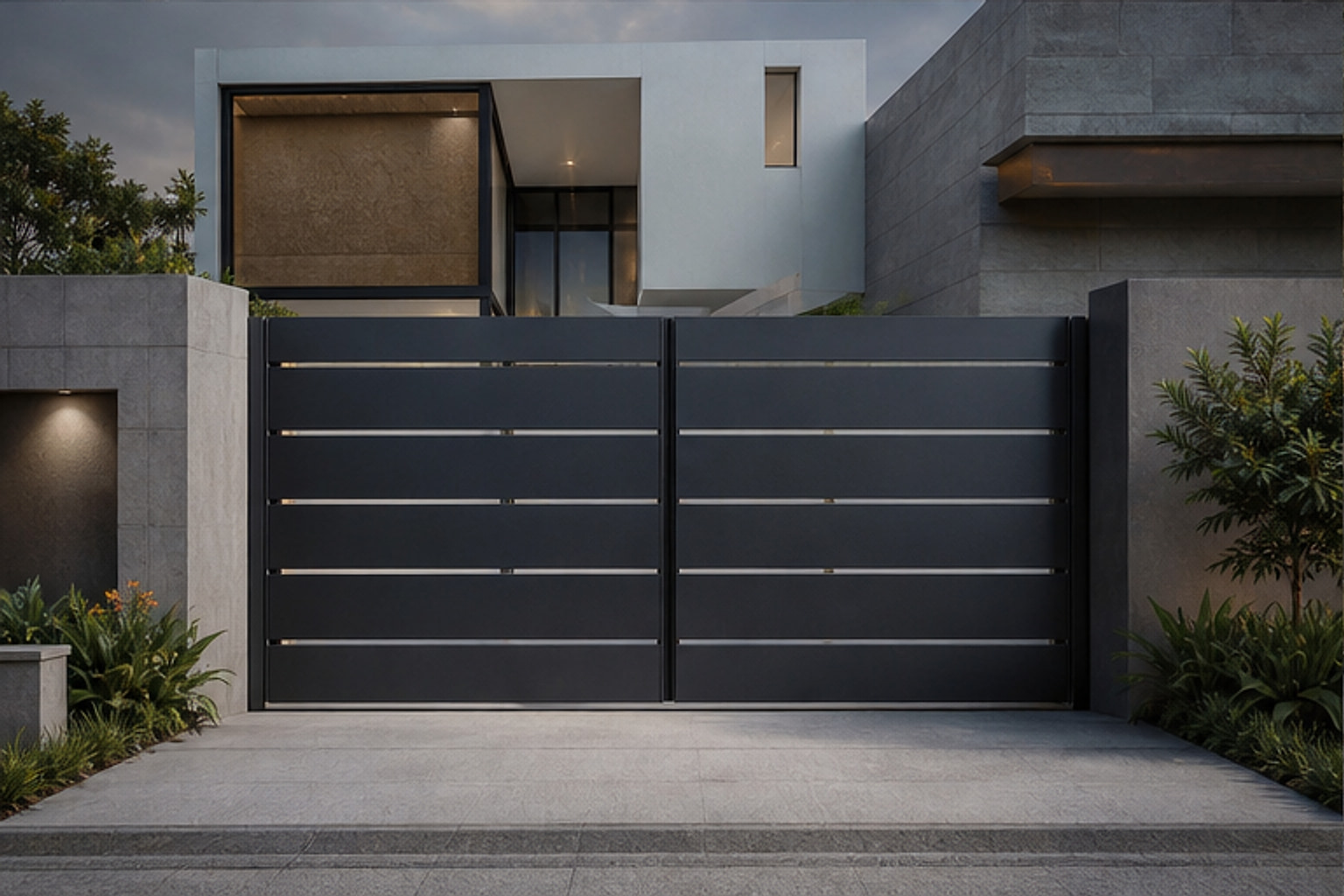 Modern Contemporary Gate
Watch out for: Too many competing slat directions can make a simple elevation feel busy.
Warm Modern
Colour and material direction: Compare timber tones with neutral walls and a darker frame. Confirm the actual finish separately.
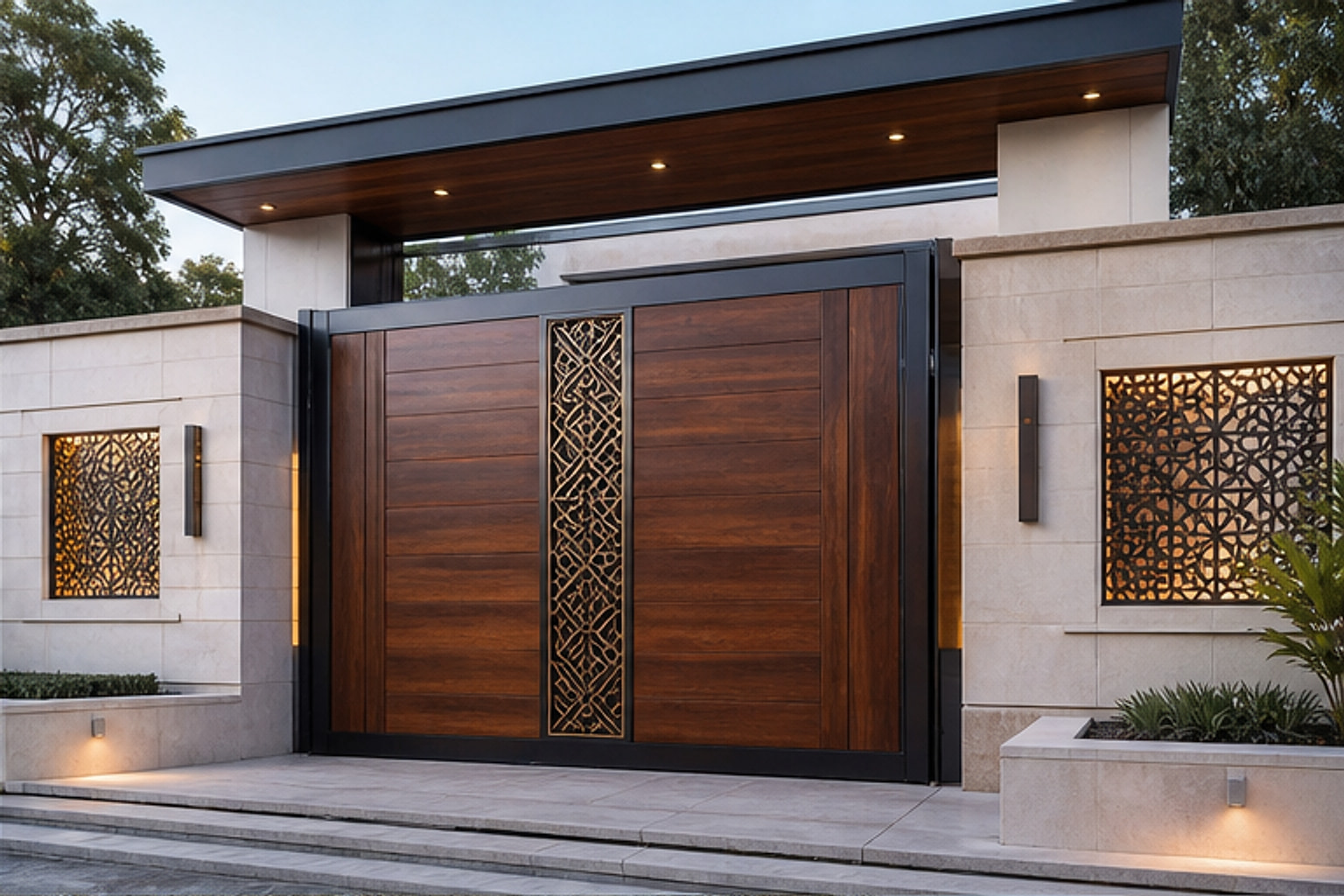 Luxury Wooden Fusion Gate
Watch out for: Several unrelated timber shades can look mismatched. Compare samples in daylight.
Geometric Statement
Colour and material direction: Keep the patterned panel in a limited colour palette so its shape remains clear.
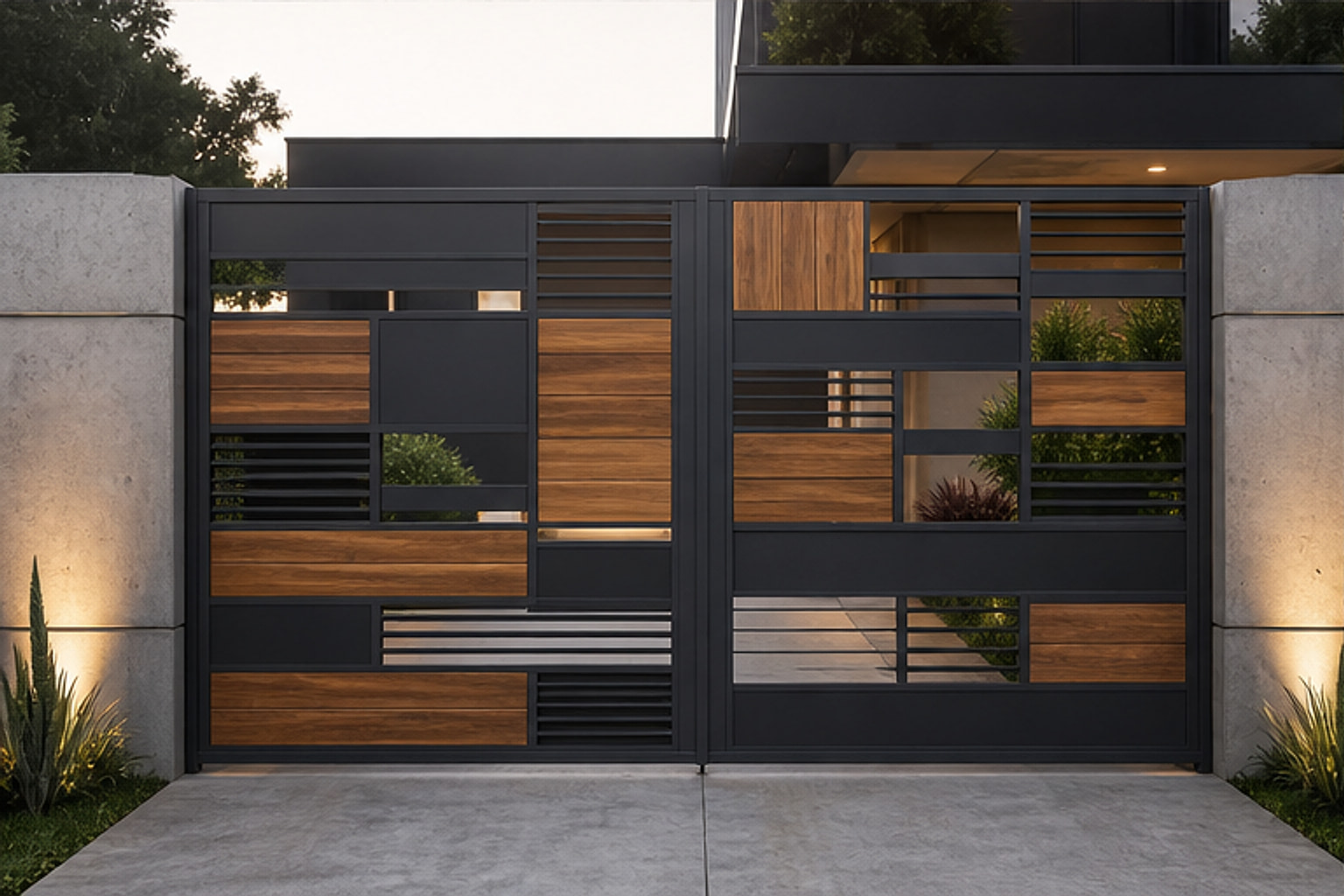 Cubic Geometric Gate Design
Watch out for: Check pattern scale against the full elevation, not only a close-up image.
Decorative Modern
Colour and material direction: Consider a dark base with a restrained accent finish, subject to actual samples.
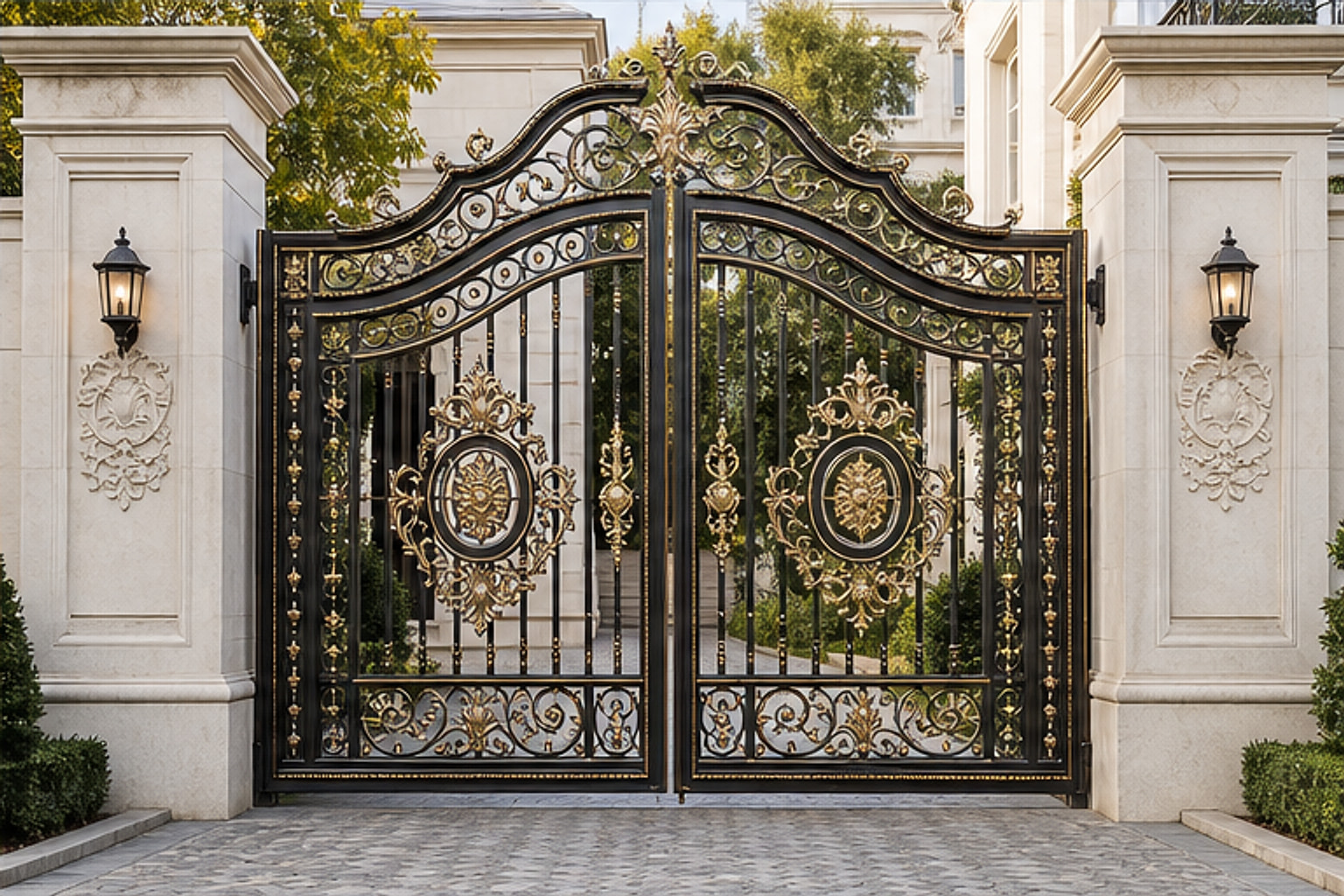 Deluxe Ornamental Swing Gate
Watch out for: Dense ornament across every element can overwhelm the house. Plan cleaning access too.
Shortlist one main direction, then compare your choices in the entrance gate collection, façade collection and balcony railing collection. Confirm material specifications, dimensions and installation details with your project professional.
3. Coordinate the Major Exterior Elements
The entrance gate is often the most visible element, but it should not be selected in isolation.
Consider how its pattern, colour and proportions relate to:
- Balcony railings
- Window grills
- Façade screens
- Entrance canopies
- Pergolas
- Boundary walls
- Exterior lighting
For example, a gate with strong vertical lines can be coordinated with a simpler vertical-fin balcony railing. The patterns do not need to match exactly; repeating a similar visual rhythm is usually enough.
4. Keep the Material Palette Controlled
Using too many unrelated materials can make an exterior look fragmented. A controlled palette of two or three primary materials generally produces a more cohesive result.
Possible combinations include:
- Charcoal metal with warm stone
- Black metal with wood-look finishes
- Grey cladding with bronze-toned screens
- Textured plaster with powder-coated steel
- Natural stone with aluminium or mild-steel elements
Material selection should consider appearance as well as weather resistance, availability and maintenance.
5. Consider Privacy and Ventilation
An attractive exterior must also respond to practical needs.
Before choosing a screen, gate or railing, decide how much openness or privacy is required. A fully solid gate provides greater visual privacy but may reduce airflow. A perforated or slatted design can create a balance between privacy, light and ventilation.
For balconies and façade screens, consider:
- Visibility from neighbouring properties
- Direction of sunlight
- Air circulation
- Required shade
- Views from inside the home
- Ease of cleaning
6. Evaluate Maintenance Requirements
Some designs look impressive in photographs but may be difficult to maintain.
Intricate patterns create more edges and joints where dust can collect. Deep grooves, exposed fasteners and complex decorative details may also require additional cleaning or periodic attention.
Ask these questions before finalising a reference:
- Is the pattern easy to clean?
- Is the finish appropriate for outdoor exposure?
- Can damaged sections be accessed?
- Are replacement materials locally available?
- Will the design still look balanced after regular use?
7. Review Designs in Realistic Proportions
A design that looks attractive in a close-up image may behave differently when applied to a wide gate or large façade.
Always consider:
- Actual width and height
- Pattern scale
- Structural support
- Opening mechanism
- Sightlines from the street
- Relationship with the building elevation
Reference images should be treated as design inspiration, not ready-to-build technical drawings. Final dimensions, materials and structural details should be reviewed by suitable professionals.
8. Create a Focused Shortlist
Instead of saving dozens of unrelated images, create a shortlist containing:
- Two or three entrance-gate directions
- One preferred railing style
- One primary façade material
- One screen or canopy concept
- A consistent colour palette
- Examples of suitable lighting
A focused collection makes it easier to communicate your preferences to architects, designers and fabricators.
Build a Clearer Exterior Vision
The right exterior design is not simply the most dramatic image. It is the direction that complements the architecture, meets practical needs and remains visually consistent across different elements.
HEBE Exterio helps you explore curated ideas for gates, façades, balcony railings, pergolas, canopies, screens and architectural metalwork. Compare different possibilities and save the references that best express your preferred direction.
Explore thoughtfully. Compare practically. Save only what supports your vision.
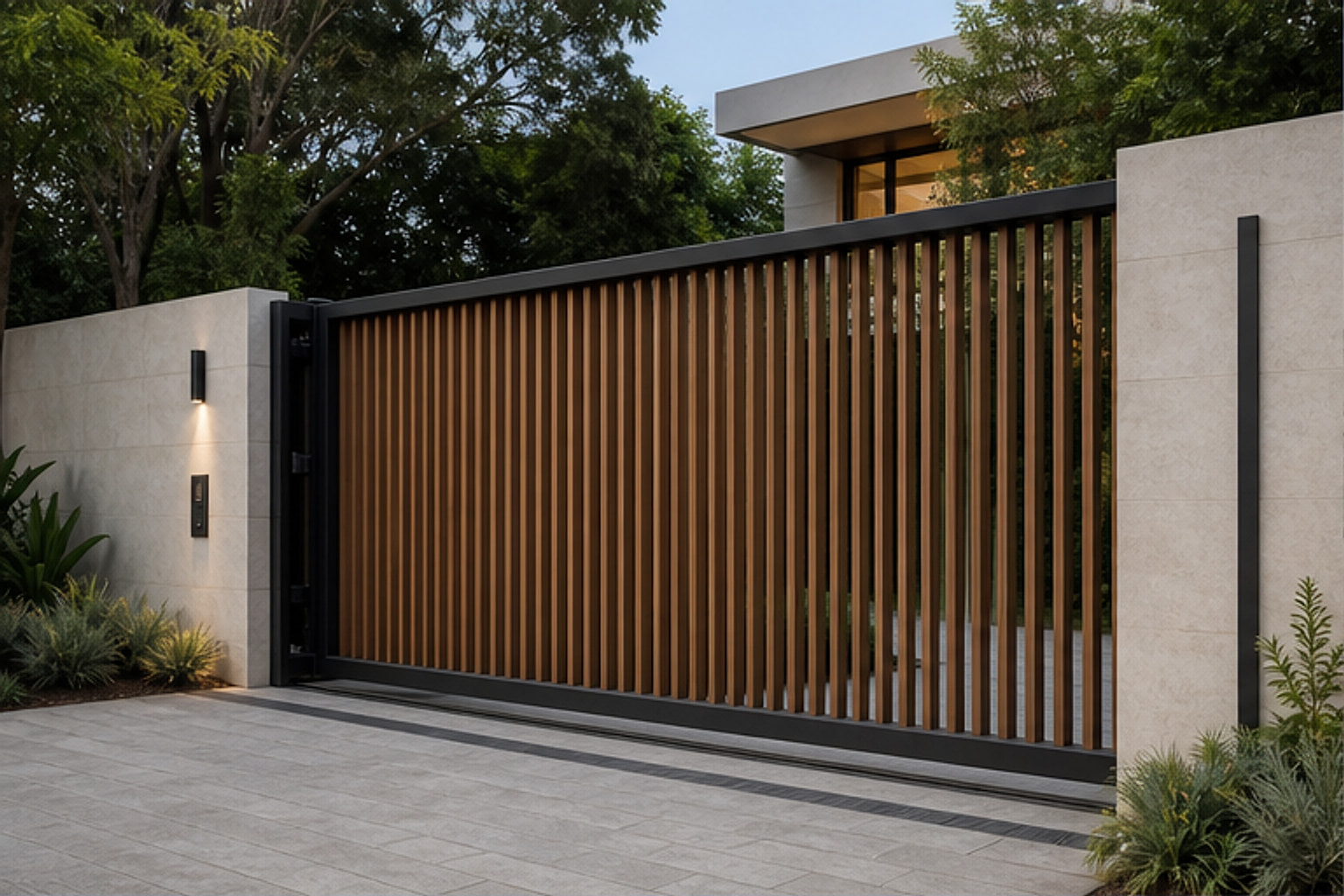 Sliding Gate Design
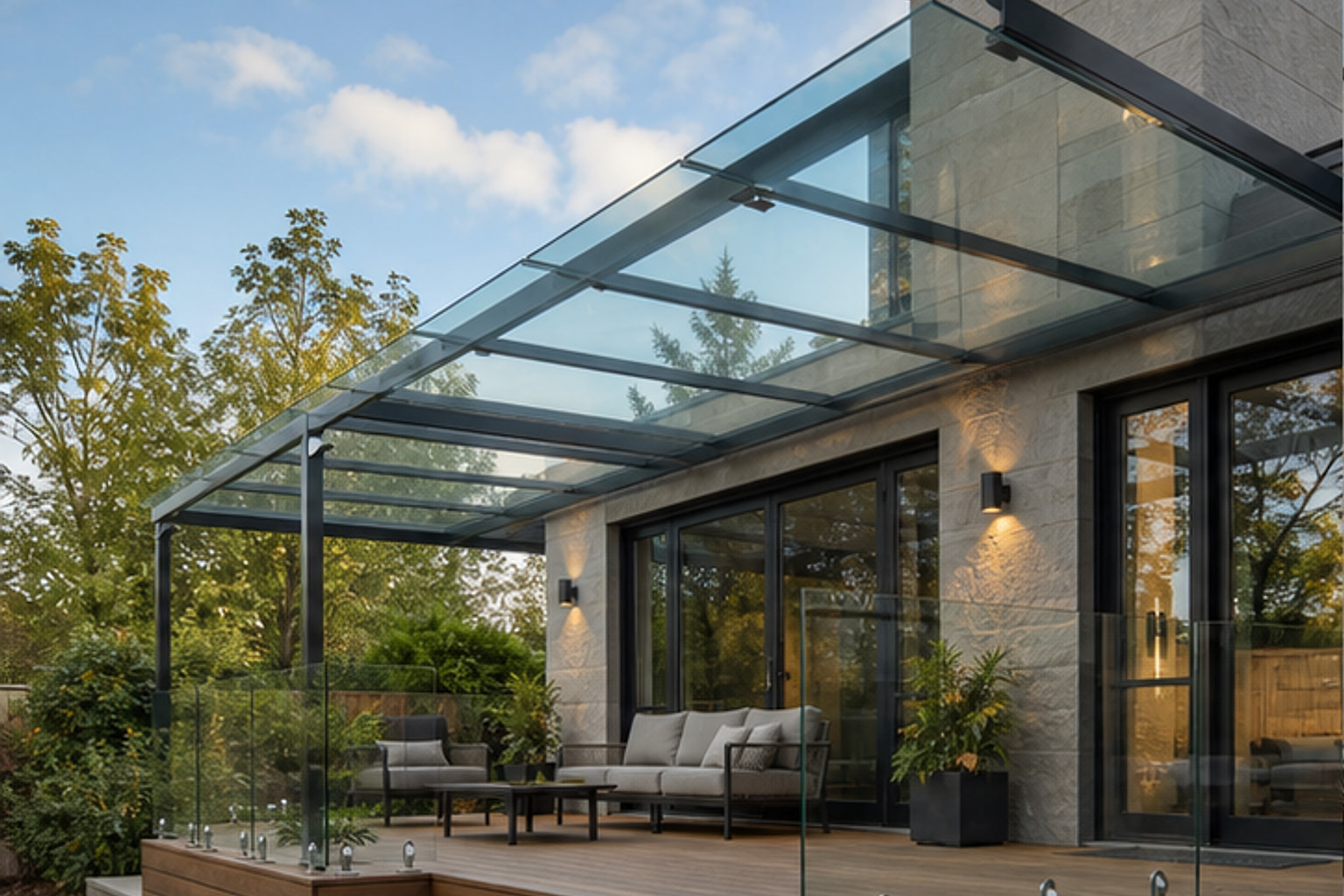 Glass Deck Canopy