Is a Gate Just for Safety, or Should It Complement Your House Elevation and Look?
When we think about a main gate for a house, security is usually the first thing that comes to mind. A strong gate protects the property, controls access, and creates a clear boundary between the home and the street.
But in modern architecture, a gate is much more than a security feature.
The main gate is one of the first architectural elements people notice when they look at a house. Its material, color, proportions, pattern, and overall design can either complement the house elevation or feel completely disconnected from it.
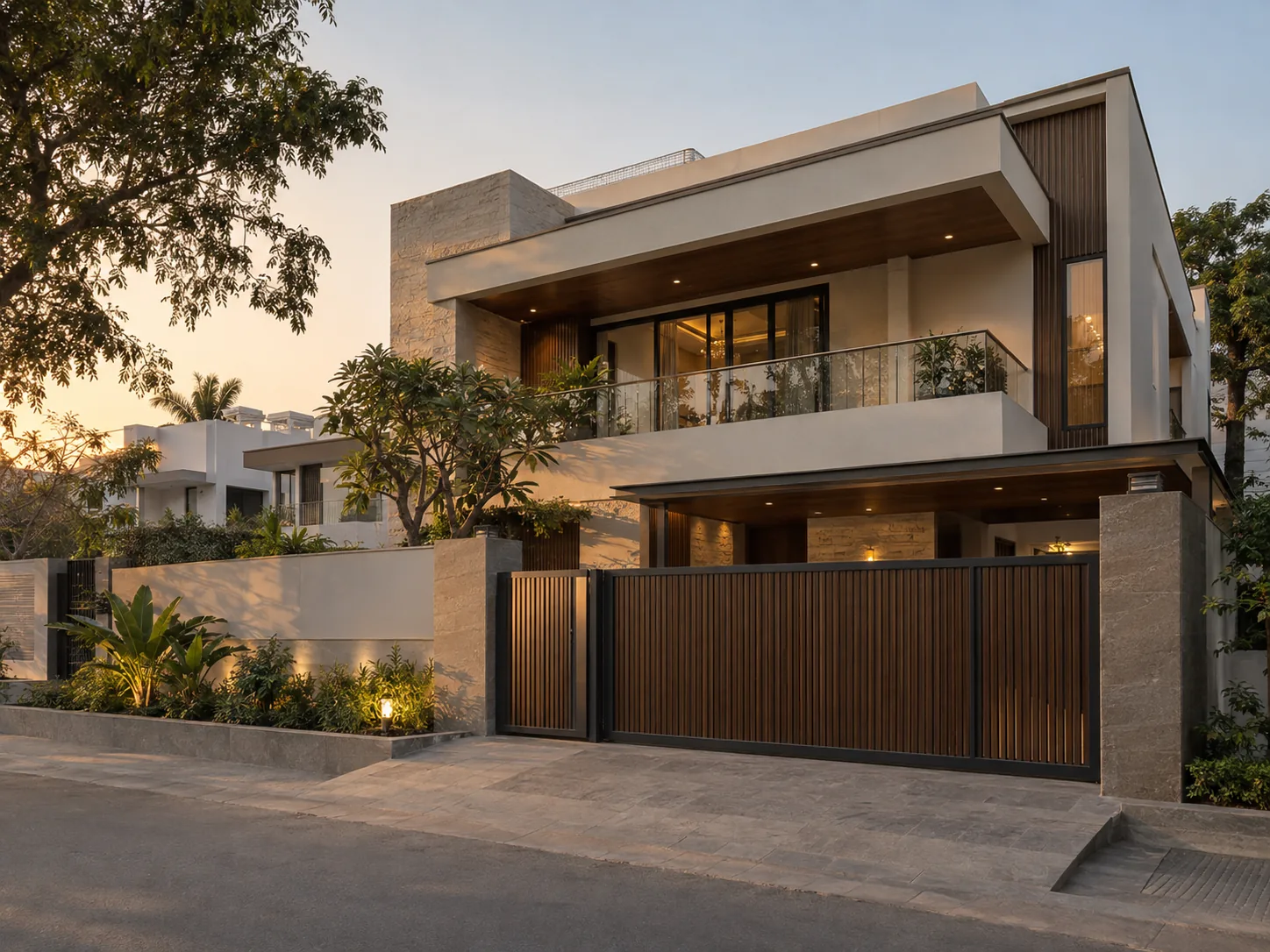
The home shown here is a good example. The contemporary elevation combines clean horizontal lines, light-toned walls, stone textures, warm wooden elements, glass railings, landscaping, and architectural lighting. Instead of treating the gate as a separate security barrier, the design uses vertical wood-toned slats with a dark frame, visually connecting the gate with the rest of the façade.
So, should a gate be designed only for safety?
The better question is: why choose between security and appearance when a well-designed gate can provide both?
A Main Gate Is Part of the House Elevation
A beautiful house elevation design is created through coordination. Walls, balconies, windows, cladding, lighting, landscaping, boundary walls, doors, and gates all contribute to the overall appearance.
Because the gate occupies a large portion of the front boundary, its visual impact can be significant.
Imagine a carefully designed modern house with elegant stone cladding, subtle exterior colors, warm wooden accents, and contemporary glass details. Now imagine placing a gate in front of it that has a completely unrelated color, decorative pattern, or architectural style.
The gate may still function perfectly, but visually, the elevation loses some of its harmony.
That is why architects and homeowners increasingly consider modern main gate design as an important part of the overall front elevation design rather than something selected after construction is complete.
Safety Should Always Be the Foundation
A gate's appearance is important, but its basic purpose should never be ignored.
A good home security gate needs to provide controlled access, suitable privacy, structural strength, and dependable everyday operation. Its height, opening mechanism, spacing, visibility, locking system, and material should be selected according to the property and the homeowner's requirements.
However, functionality does not require the gate to look heavy or unattractive.
Modern fabrication and architectural design make it possible to create a secure modern house gate while maintaining clean lines and an elegant appearance.
The gate visible in this house, for example, creates a strong visual boundary without overwhelming the elevation. The vertical slat treatment provides privacy while still looking refined and contemporary.
The goal should therefore be security through good design rather than security instead of good design.
Your Gate Creates the First Impression of Your Home
Before visitors notice the living room, staircase, furniture, or interior décor, they experience the exterior.
And often, the front gate design is the first element they interact with.
This gives the gate an important role in creating the architectural identity of the property.
A well-designed residential main gate can make a home appear more sophisticated, contemporary, welcoming, minimal, traditional, or luxurious depending on the architecture around it.
In modern homes, simpler designs often work particularly well. Straight lines, restrained colors, vertical members, wood-finish elements, metal framing, and carefully planned lighting can create a premium appearance without excessive decoration.
The gate does not need to demand attention.
Sometimes, the best gate is the one that quietly completes the architecture.
The Gate and House Elevation Should Speak the Same Design Language
One of the easiest ways to achieve an attractive house front design is to repeat selected materials, colors, or visual patterns across different exterior elements.
Look at the relationship between the gate and the elevation in this image.
The gate uses warm vertical slats framed by a dark structure. Similar warm wooden tones and vertical textures appear elsewhere on the façade. The surrounding neutral walls and stone surfaces create contrast, while the dark window and railing details help tie everything together.
This repetition creates visual continuity.
For a contemporary property, a modern gate design for home might therefore repeat the color of the window frames, the texture of exterior wooden panels, the shade of stone cladding, or even the vertical and horizontal lines already present in the architecture.
For a traditional home, the same principle applies, although the forms and detailing may be different.
The objective is not necessarily to make everything identical. It is to make the elements feel like they belong to the same house.
Material Selection Can Transform a Main Gate
Material plays an important role in both security and visual appeal.
Metal is widely used for house gate design because it can provide structural strength while supporting many architectural styles. Depending on the desired look, it can be combined with wood-finish panels, slats, perforated sheets, glass-like inserts, or other exterior-grade finishes.
For a modern elevation like the one shown here, the combination of dark framing and warm wood tones works particularly well because it adds contrast without making the façade overly busy.
Material should also be considered alongside practical factors such as exterior exposure, maintenance, durability, operation, and local weather conditions.
A beautiful gate that is difficult to maintain may not remain beautiful for long.
The most successful main gate designs for modern homes combine appearance with practical long-term usability.
Privacy Is Also Part of Gate Design
Not every homeowner wants the same level of visibility from the street.
Some prefer a completely closed privacy gate for home, while others prefer a more open design that keeps the entrance visually connected to the surroundings.
Vertical slats offer an interesting middle ground.
They can create privacy and visual screening while avoiding the feeling of a completely solid wall. Their repeated lines also work naturally with many contemporary house elevation designs.
The correct solution depends on the distance between the street and house, surrounding properties, landscaping, entrance layout, and personal preference.
Privacy should therefore be planned as part of the architectural concept rather than treated only as a security requirement.
Lighting Makes the Gate Part of the Night Elevation
Exterior design does not stop working after sunset.
In the pictured residence, warm architectural lighting emphasizes the soffits, entrance areas, landscaping, walls, and material textures. The result is a completely different but equally considered evening appearance.
A modern gate with exterior lighting can become part of this composition.
Rather than using excessively bright lights, subtle illumination around pillars, boundary walls, landscaping, pathways, or gate areas can improve visibility while also highlighting the architecture.
When gate design and lighting are planned together, the entrance can remain attractive during both daytime and nighttime.
Landscaping Helps Connect the Gate With the House
Plants may appear unrelated to gate design, but landscaping can strongly influence how a front elevation is perceived.
In this home, greenery softens the straight architectural lines and provides a natural transition between the street, boundary wall, gate, and house.
This is particularly useful in modern home exterior design, where large flat surfaces and geometric forms can otherwise feel visually hard.
A combination of an appropriate boundary wall design, main gate, entrance paving, outdoor lighting, and landscaping creates a much more complete frontage than focusing on the gate alone.
This is why exterior design works best when viewed as one composition.
Should Your Gate Match the House Exactly?
Not necessarily.
Matching does not mean copying every material or color used on the elevation.
In fact, too much repetition can make the design monotonous.
A gate can contrast with the house while still complementing it.
For example, a light-colored elevation may use a dark gate to provide definition. A minimalist façade may introduce subtle wood tones at the gate to add warmth. A house with strong vertical architectural features may use horizontal gate members to create controlled contrast.
What matters is that the relationship feels intentional.
A thoughtfully designed modern front gate should support the architectural character of the home rather than compete with it.
Gate Design Should Begin Along With Elevation Design
One common mistake is finalizing the entire front elevation first and selecting the gate at the end.
That approach can make it difficult to achieve a completely integrated result.
Ideally, the main gate design, house elevation, boundary wall, driveway, pedestrian entrance, landscaping, and exterior lighting should be considered together during the design stage.
This allows proportions, materials, colors, and alignments to work together.
For example, the position of a gate pillar may relate to architectural lines above it. The gate height may correspond with the boundary wall. Gate colors may repeat window-frame finishes. Vertical slats may echo façade panels.
Small relationships like these are what make an exterior feel professionally designed.
The Best Gate Provides Security Without Looking Like a Barrier
Ultimately, the main gate has two identities.
It is a functional security element, but it is also an important architectural feature.
A gate designed only for appearance may overlook practical requirements. A gate selected only for security may weaken an otherwise carefully planned elevation.
The strongest solution combines the two.
A thoughtfully designed house main gate can provide safety, privacy, controlled access, durability, and convenience while enhancing the front elevation of the house.
The contemporary home shown here demonstrates the idea particularly well. The clean gate geometry, vertical wood-toned finish, dark framing, surrounding stone textures, greenery, and warm lighting all contribute to a unified exterior.
So, is a gate just for safety?
No. Safety is its essential function, but good gate design can also become an important part of the home's architectural identity.
Your gate does not have to be the most decorative feature of your house.
It simply needs to look like it was always meant to be there.
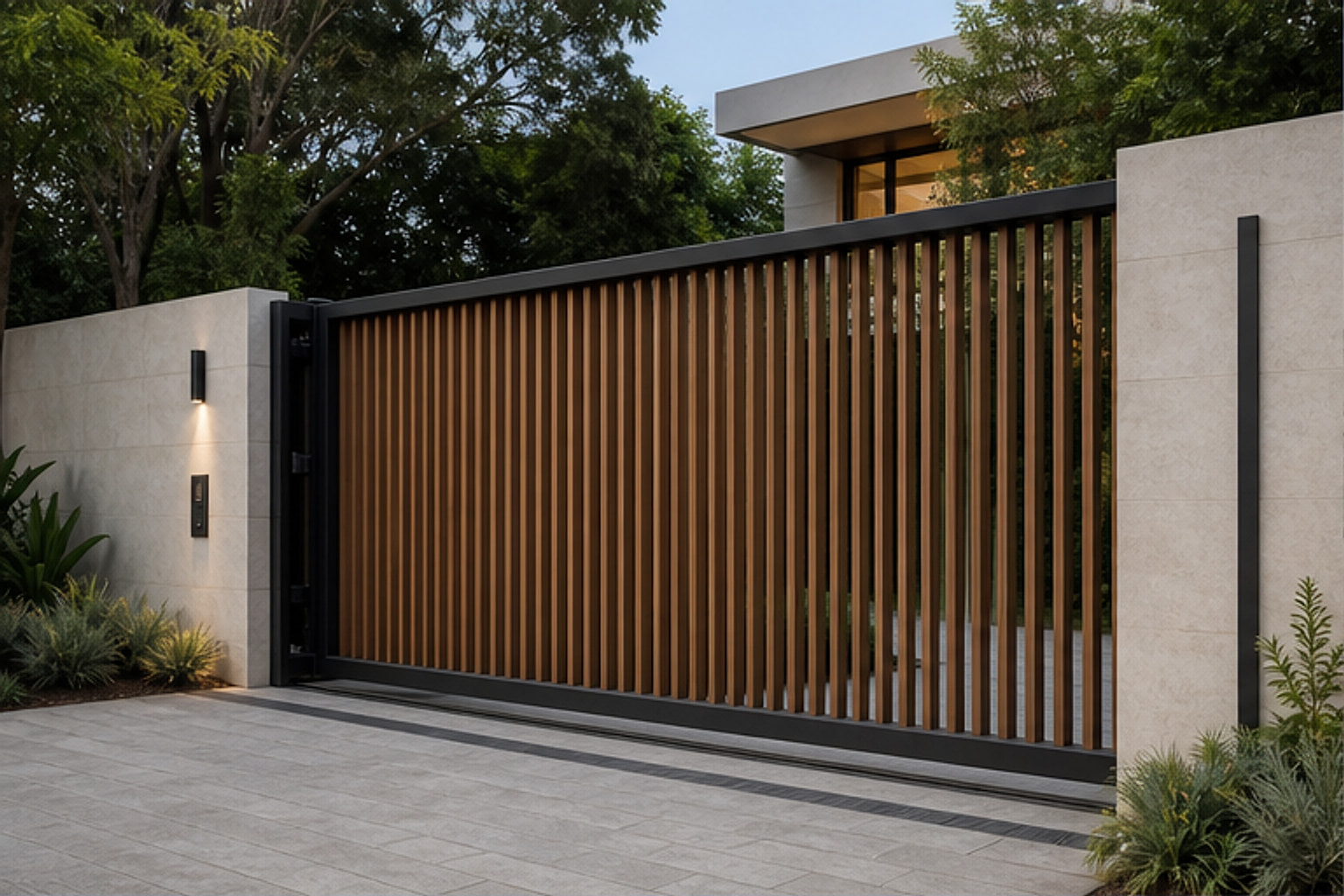 Sliding Gate Design
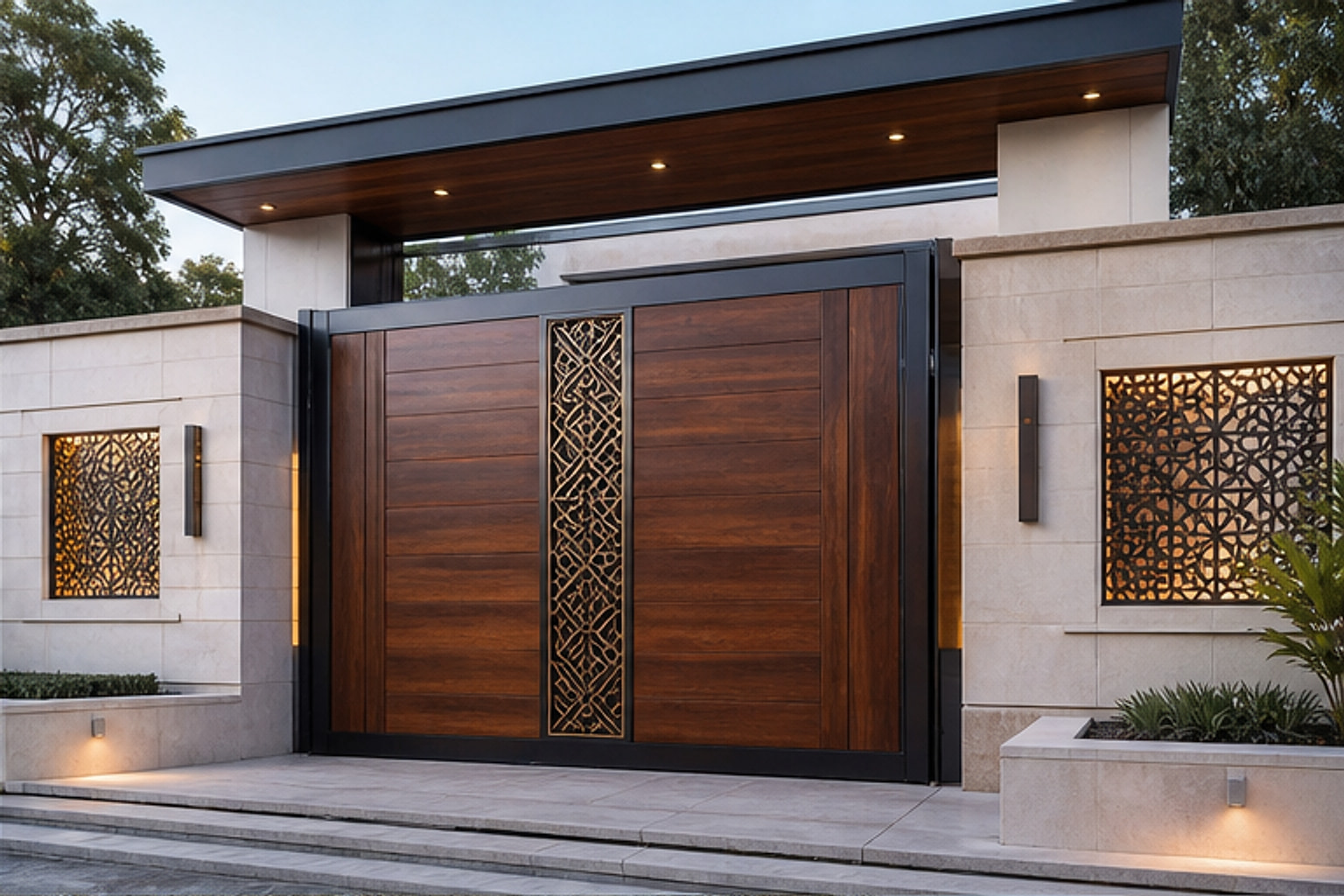 Luxury Wooden Fusion Gate
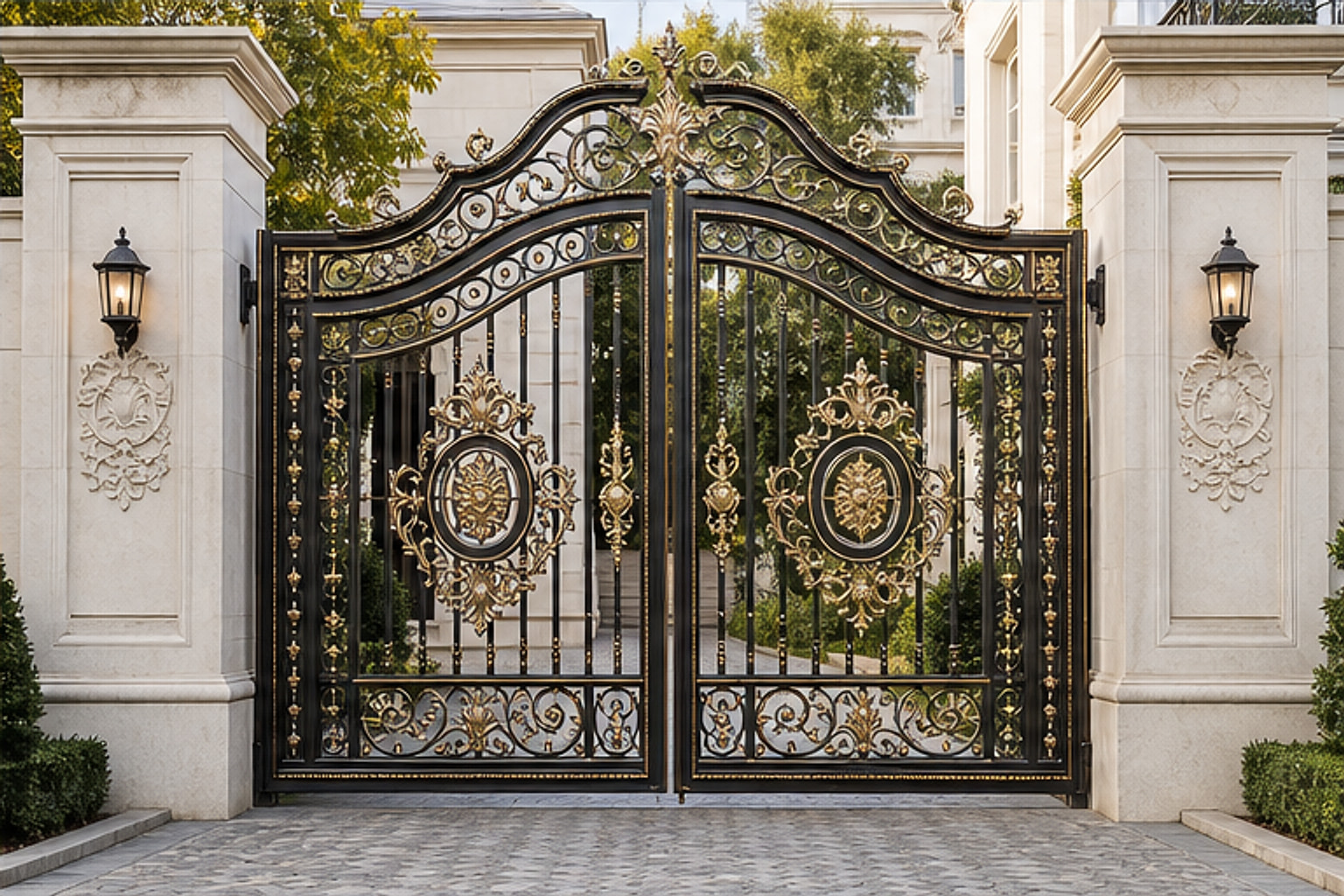 Deluxe Ornamental Swing Gate