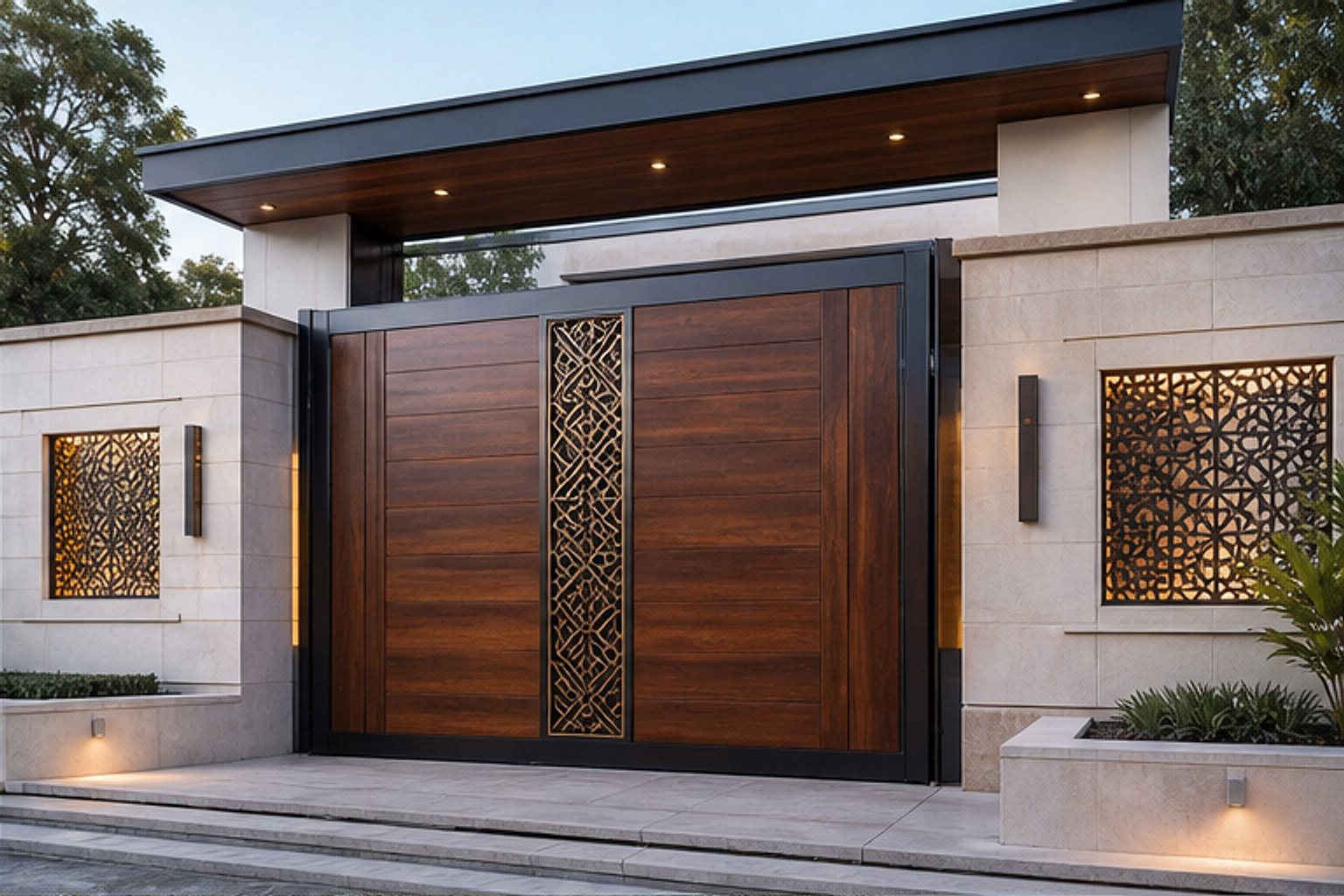
**A Strong Contemporary First Impression**
The most striking feature of this entrance is its clean horizontal scale and strong vertical detailing.
Dark metal slats create a bold, streamlined appearance, while the warm timber section introduces contrast and visual warmth. Instead of appearing purely functional, the gate feels like a natural extension of the home's architecture.
This type of design works particularly well with modern properties because it follows the same principles often used throughout contemporary buildings: simple forms, limited materials, strong lines, and carefully controlled details.
**The Balance Between Metal and Timber**
One of the most effective design choices is the combination of dark metal and natural-looking timber.
Black or charcoal finishes give the gate a refined and structured appearance. Timber tones soften that effect and add warmth, preventing the entrance from feeling overly industrial.
The same warm material language is visible higher on the property, creating visual consistency between the gate and the house itself.
When exterior materials are repeated in this way, the entire property can feel more unified.
**Privacy Without Visual Clutter**
A front gate often needs to provide privacy while still contributing positively to the home's appearance.
Vertical slats offer a particularly elegant solution. Their repetition creates a sense of rhythm and texture while maintaining a clean overall silhouette.
From a distance, the gate appears solid and private. Up close, the individual vertical elements add depth and architectural interest.
This is a useful approach for homeowners who want a strong boundary without relying on a completely flat or visually heavy surface.
**Stone Pillars Add Structure**
The pale stone pillars on either side of the gate provide another important contrast.
Their lighter colour frames the darker gate and gives the entrance a more permanent, substantial appearance. The stone also introduces texture against the smoother metal and timber surfaces.
Combining several complementary materials can make a modern exterior more interesting without making it feel complicated. The key is restraint: each material should have a clear purpose and relate to the surrounding architecture.
**Architectural Lighting Changes the Entrance at Night**
Lighting plays a major role in the atmosphere of this design.
The wall-mounted lights on the stone pillars cast warm illumination both upward and downward, highlighting the texture of the stone while clearly defining the entrance.
Additional lighting around the building and landscaping creates layers of warm light against the deep blue evening sky.
This demonstrates an important principle of exterior design: a gate should be considered not only in daylight but also after sunset.
Well-positioned lighting can improve visibility while also turning a practical entrance into an architectural feature.
**Landscaping Softens the Hard Surfaces**
Modern gates naturally involve strong materials such as metal, stone, concrete, and timber. Surrounding greenery helps balance those harder architectural elements.
Trees, shrubs, and low planting around this entrance add softness and bring another layer of colour and texture to the scene.
The result is an exterior that feels contemporary without becoming cold or severe.
For modern homes in particular, landscaping can provide the visual connection between built structures and the natural environment.
**A Gate Should Feel Like Part of the House**
Perhaps the strongest lesson from this design is that a successful gate should not look like an afterthought.
Its colours, lines, proportions, and materials should connect with the architecture behind it.
Here, dark structural elements relate to the home's contemporary framework, while timber tones appear both at the gate and within the building. Stone, greenery, glass, and warm lighting complete a coordinated exterior palette.
That consistency helps transform a necessary security feature into an important part of the property's overall design.
**Final Thoughts**
Modern gate design is increasingly about finding the right balance between function and architecture.
A well-designed entrance can provide privacy and define a property's boundary while also enhancing its visual identity. By combining clean vertical lines, dark metal, warm timber, natural stone, subtle landscaping, and carefully positioned lighting, even a highly functional sliding gate can become one of the most distinctive features of a contemporary home.
The best entrances do not compete with the architecture behind them. They introduce it.
