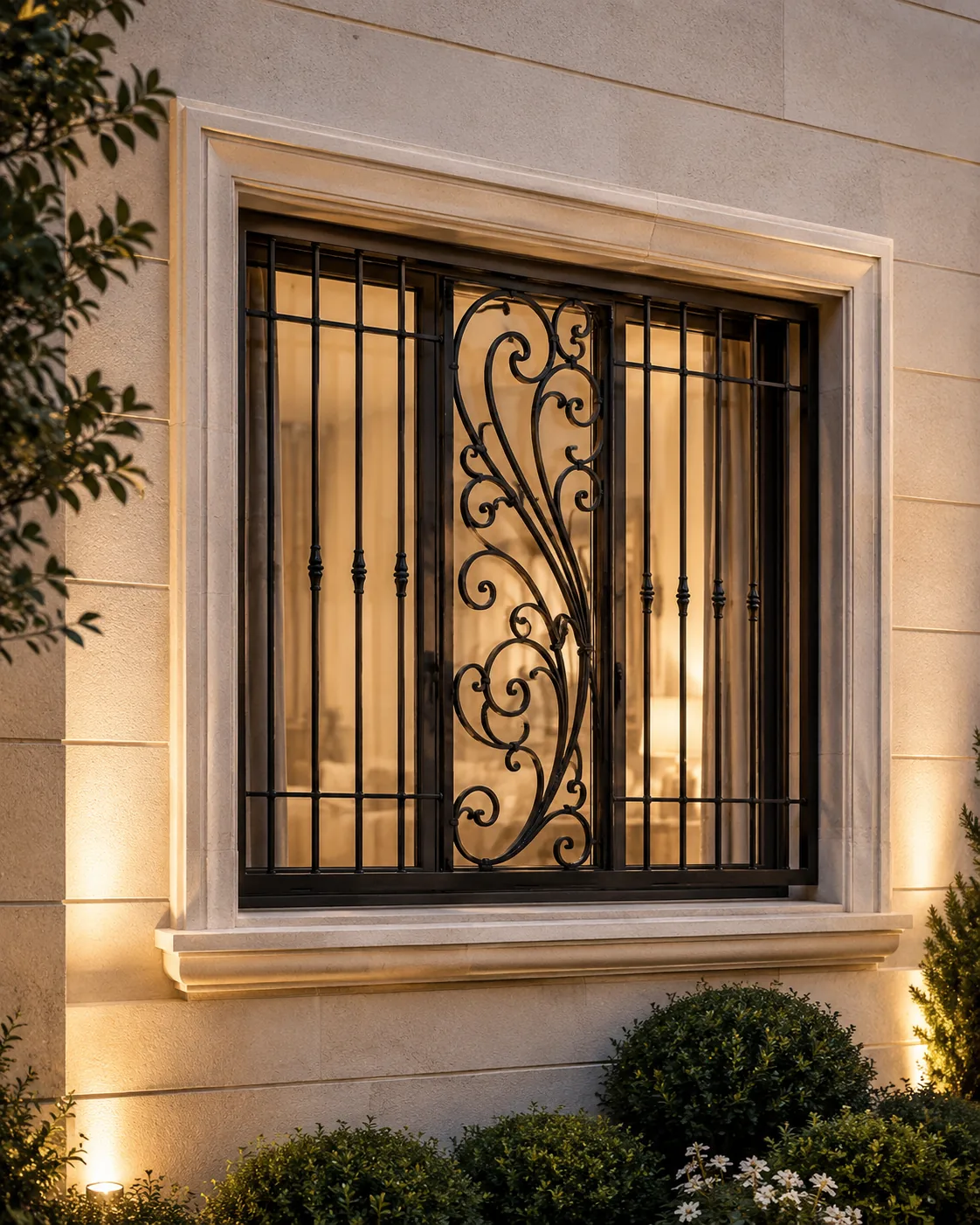
Windows are often treated as practical features, but from the outside, they are one of the most important elements of a home's architecture. Their size, placement, frame color, grill pattern, proportions, and surrounding details can completely change how a house front design looks. A beautifully designed window can make even a simple exterior feel refined. A poorly planned one can make an expensive facade look unbalanced. The window shown here is a good example of coordinated exterior design. The dark metal grill creates contrast against the light stone wall, while the ornamental central pattern gives the window character. Warm exterior lighting and landscaping soften the overall appearance. The important lesson is not that every house needs decorative ironwork. It is that your window design should belong to the architecture around it. Here are some of the most common window design mistakes that can hurt the appearance of your home's exterior.
1. Choosing a Window Style That Does Not Match the House
One of the biggest mistakes in home exterior design is selecting windows separately from the architectural style of the building. A highly decorative window may look beautiful on a classical or luxury facade, while the same design could appear out of place on an extremely minimalist house. Likewise, simple aluminium frames might work perfectly with a contemporary elevation but feel too plain on a traditional facade filled with decorative stonework. Before choosing your windows, consider the complete house elevation design. The window style should coordinate with the home's:
- exterior wall materials
- roof style
- balcony railing design
- columns and architectural details
- entrance door
- boundary wall
- main gate design
- exterior colors
- landscape design
When these elements share a common visual language, the entire house feels more intentional.
2. Using the Wrong Window Proportions
Even a beautiful window design for home exterior can look awkward when its dimensions do not suit the wall. A tiny window placed on a large blank wall can appear lost. An oversized window squeezed between architectural features may make the facade feel crowded. Good front elevation design depends heavily on proportion. Window width and height should relate to nearby doors, columns, balconies, wall panels, and other windows. In multi-storey houses, aligning window openings vertically can also create a cleaner architectural rhythm. Before construction begins, look at the entire elevation rather than evaluating each window individually.
3. Selecting an Overly Complicated Window Grill Design
Decorative grills can add impressive character to a home, particularly when they are carefully designed. However, excessive detailing can become distracting. A window grill design should enhance the architecture instead of competing with it. If your facade already includes decorative mouldings, patterned tiles, elaborate railings, stone cladding, and a heavily detailed iron gate design, another complicated pattern may make the exterior visually overwhelming. The window in the image demonstrates a more balanced approach. Straight vertical bars create structure while decorative scrollwork becomes a central focal point. This combination allows the grill to feel ornamental without covering every part of the window. For contemporary properties, a modern window grill design may use simple vertical or horizontal lines. For traditional homes, carefully controlled curves and ornamental metalwork can create a richer look.
4. Ignoring the Relationship Between Windows and Main Gate Design
Many homeowners choose their house gate design and windows at completely different stages. That can result in two major exterior features using unrelated colors, patterns, materials, and styles. They do not need to be identical, but some visual relationship is useful. For example, a black wrought iron window grill design can pair naturally with a black modern main gate design using similar lines or subtle decorative details. Likewise, a minimalist grey gate might work better with slim grey aluminium window frames than highly decorative traditional grills. Coordinating your gate and window design helps create a more unified house front.
5. Choosing a Frame Color Without Considering the Exterior Wall
Window frame color creates contrast, so it should always be chosen alongside the exterior wall finish. Dark frames against cream, white, beige, or light stone can create a striking architectural outline, similar to the effect visible in this image. But contrast is not always necessary. Some modern house exterior designs use frames close to the wall color to create a softer, more seamless appearance. Before selecting black, white, brown, bronze, grey, or another finish, compare it directly with your: wall paint, stone cladding, tiles, roof colors, door, railings, and front gate design. Looking at everything together is much safer than choosing colors from individual catalogues.
6. Forgetting the Surrounding Window Border
Sometimes the window itself is attractive, but the area around it looks unfinished. Window borders, stone trims, projections, mouldings, ledges, or recessed frames help visually connect the opening to the building. Notice how the pictured window is surrounded by a thick light-colored architectural frame. It gives the opening greater visual importance while creating separation between the dark metalwork and the exterior wall. Similar techniques can improve both traditional and modern house front designs. The surrounding treatment should still remain proportional. An oversized border around a small window can become just as distracting as having no border at all.
7. Mixing Too Many Exterior Materials
Stone, brick, wood, metal, tiles, glass, concrete, and textured paint can all look attractive. Using all of them together is another matter. A strong residential facade design normally uses a controlled material palette. If your exterior already contains several finishes, keep the window treatment relatively simple. If the walls are intentionally understated, windows can become stronger decorative features. The goal should be hierarchy. Visitors should immediately understand which architectural elements are meant to attract attention.
8. Installing Different Window Designs Without a Clear Reason
Using several unrelated window styles on the same facade can make a home look like different designs have been combined together. One floor might have rectangular windows with black grills, another might use white sliding windows, while a third features heavily curved decorative frames. Functional requirements can certainly require different window sizes. But repeating certain elements—such as frame colors, materials, proportions, or grill patterns—helps maintain consistency. Repetition is one of the simplest ways to improve house exterior design.
9. Making Security Features Look Like an Afterthought
Window grills are often installed primarily for security. Unfortunately, when grills are added after construction without considering the architecture, they can look like attachments rather than part of the house. Planning the iron window grill design during the elevation design stage can produce a much cleaner result. The grill can then coordinate with: the window frame, facade detailing, balcony railing, staircase railing, entrance door, and main gate design. This turns a functional feature into part of the architectural composition. Security requirements should, of course, remain the priority where grills are needed. Decorative decisions should never interfere with safe operation or necessary emergency egress.
10. Ignoring Exterior Lighting Around Windows
Your house does not stop being visible after sunset. Good exterior lighting design can emphasize textures, architectural frames, stonework, landscaping, windows, and entrance features. In the example image, warm illumination around the wall highlights the window and produces gentle shadows around the decorative grill. Without excessive brightness, the window becomes part of the nighttime facade. Lighting can be positioned beside windows or directed toward surrounding walls, but fixtures should be planned carefully so that they do not create uncomfortable glare inside the house.
11. Forgetting About Landscaping
Architecture and landscaping should not be treated as completely separate projects. Plants around windows can soften hard stone, concrete, glass, and metal surfaces. They also help connect the building visually with its outdoor environment. Here, dark green shrubs contrast effectively with the light exterior wall and black window grill. For a polished luxury house exterior design, think about the combination of architecture, outdoor lighting, boundary design, driveway, garden, entrance, and landscaping rather than focusing only on the building.
12. Copying Trending Window Designs Without Considering Your Own House
Pinterest, Instagram, architecture websites, and design catalogues provide endless modern window design ideas. They are excellent sources of inspiration, but copying a design exactly can create problems. A window photographed on a large contemporary villa may not suit a narrow urban house. Similarly, a detailed classical grill may conflict with a minimalist facade. Use reference images to identify ideas you like—such as colors, proportions, materials, or patterns—and then adapt them to your own architecture. A successful exterior should look like one complete design rather than a collection of popular ideas.
How to Choose the Right Window Design for Your Home
Start with the architecture of the entire property rather than browsing windows independently. Your window selection should consider the house front elevation, exterior materials, available wall space, ventilation requirements, natural light, privacy, security needs, surrounding landscape, and entrance design. Then look at how your window frame and grill relate to other metal elements. For example, if your home has a black iron main gate, black balcony railings, and black exterior light fixtures, repeating that finish around the windows can create visual continuity. You do not need to make everything identical. Repeating a few carefully selected colors and materials is usually enough to establish a consistent theme. Window and Main Gate Design Should Tell the Same Story The strongest home exteriors usually have something in common: their individual components look like they were designed for the same building. Your main gate design, windows, doors, exterior wall treatment, lighting, and landscaping should support one another. A modern home may combine geometric windows with a clean modern gate design. A more classical property may use stone borders, decorative iron window grills, ornamental gates, and warmer lighting. Neither approach is automatically better. Consistency is what matters. Small Window Details Can Make a Big Difference You do not always need a major renovation to improve your home's exterior. Updating an outdated window grill design, changing the window frame color, improving the surrounding trim, adjusting exterior lighting, or simplifying mismatched details can noticeably improve the facade. The window in this image demonstrates why those details matter. The combination of a light architectural frame, dark metal grill, warm lighting, glass, stone, and landscaping creates contrast while still feeling coordinated. That is the principle worth applying to any style of home. Final Thoughts Windows are more than openings for light and ventilation. From the street, they become permanent architectural features that influence the balance, character, and overall appearance of your property. When planning your next house exterior design, avoid selecting windows in isolation. Consider their proportions, materials, colors, grill patterns, borders, lighting, landscaping, and relationship with your main gate design and entrance. The best window design is not necessarily the most decorative or expensive one. It is the design that looks naturally connected to the rest of your home. Get those relationships right, and your windows can become one of the strongest features of your entire house front design.
